Your UAE visa grace period isn’t a flat six months for everyone. It ranges from 30 to 180 days depending on your visa category and which authority handles your file.
This guide shows you exactly how to check your remaining days, what determines your grace period length, and what happens if you run past it.
| Information | Detail |
|---|---|
| Update | 2026 |
| Official Website | https://smartservices.icp.gov.ae |
| Grace Period | 30 – 180 days, by visa category |
| Fine for Overstaying | AED 50/day |
| Exit permit fee (if overstayed) | AED 200 base fee, ~220–320 typical total |
How to Check Your Grace Period via ICP Smart Services
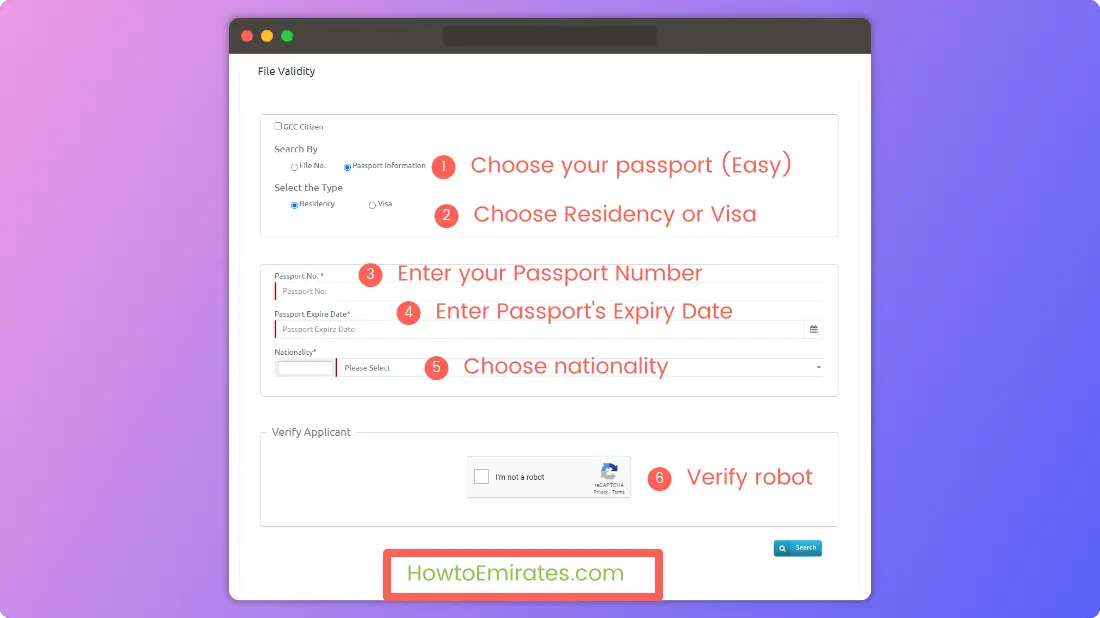
If your residence visa was processed in Abu Dhabi, Sharjah, Ajman, Umm Al Quwain, Ras Al Khaimah, or Fujairah, ICP’s Smart Services portal shows your exact remaining days.
- Go to ICP Smart Services’ File Validity search.
- Choose your search method — “Search by File Number” or “Search by Passport Information.”
- Under “Select the Type,” choose Residency.
- Under “File Type,” choose Emirate Unified Number — or use your visa/file number if you have it. If you’re not sure where to find it, see 3 Easy Ways to Find UAE Visa Number Online.
- Fill in the requested details, solve the reCAPTCHA, and click Search.
- Your result shows “Allowed days to stay in the country” — that’s your grace period.
You can also check this from your phone through the UAEICP app, which draws on the same ICP system as a mobile alternative to the web portal.
In Dubai? Use GDRFA, Not ICP
ICP’s portal only covers visas processed outside Dubai. If your residence visa was issued in Dubai, searching it on ICP returns a blank result — not an error, just the wrong system.
Dubai runs its own system through GDRFA (General Directorate of Residency and Foreigners Affairs). For the full step-by-step on GDRFA’s File Inquiry tool, see Track Your UAE Visa Application Status — the same method shows your grace period once your visa is cancelled.
Your Cancellation Notice Already Shows the Date
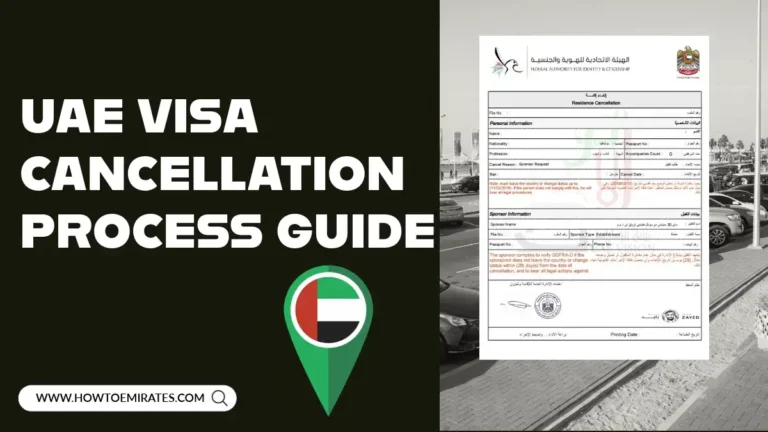
If your employer or sponsor cancelled your visa, ICP or GDRFA issued you an official cancellation form. That form shows the exact date by which you need to leave the country or change your status, printed at the bottom — no portal search needed if you still have it.
This is also the date your grace period actually counts from. It starts on the date your cancellation was approved, not the expiry date printed on your old Emirates ID.
How Long Is Your UAE Visa Grace Period? (By Category)
The blanket “6-month grace period” many residents remember from a few years ago no longer applies across the board. The underlying rules come from the same federal law in every emirate — Cabinet Resolution No. 65 of 2022 — but reported day-counts for the same nominal category still vary between ICP and GDRFA Dubai in practice. Current reporting looks like this:
| Visa / Permit Category | Grace Period | Authority |
|---|---|---|
| Standard employment/residence visa (most private-sector cases) | 30 days | ICP |
| Residence permit issued with a guarantor or host | 60 days | ICP |
| Skilled workers (levels 1–3) and property owners | 90 days | ICP |
| Golden Visa, Green Visa holders and their dependents | 180 days | ICP |
| Standard private-sector residence (Dubai) | 60 days | GDRFA Dubai |
| Golden/Green Visa and dependents (Dubai) | 180 days | GDRFA Dubai |
These figures come from multiple independently-corroborating sources rather than a single official table — ICP’s and GDRFA’s own detailed category-breakdown pages block automated verification. Always confirm your exact number of days through the portal checks above rather than relying on your category alone.
What Happens If You Overstay Your Grace Period
Leaving the country or completing a change of status within your grace period requires nothing extra — you exit through normal immigration channels.
Once your grace period actually ends without a new visa or an exit, standard overstay penalties apply: AED 50 per day, the same rate across all visa types and all emirates.
At that point, you’ll also need a formal Exit Permit before you can leave — not just in special cases like a lost passport or an absconding report, but for a routine overstay too. The base government fee is around AED 200, though typing-centre or service-centre charges typically bring the real-world total to roughly AED 220–320. Fines are usually settled as part of getting this permit, not separately.
What to Do During Your Grace Period
You have two options once your visa is cancelled. Apply for a new residency status before your days run out, or exit the country within the grace period to avoid fines entirely.
A Change of Status application (switching to a new employer, sponsor, or visa category) can be completed inside the UAE during your grace period — you don’t have to exit and re-enter to do it.
If you haven’t formally cancelled your visa yet, see our guide to UAE Visa Cancellation: Process, Fees, and Documents for what that process actually involves before your grace period even starts.
I make a point of renewing my residence visa before it lapses, which is what actually keeps my status current — that renewal is also what triggers my Emirates ID renewal, not the other way around. If you’ve missed that window and are already in your grace period, the steps above are what you need to check exactly how much time you have left, and what it’ll cost if you run past it.
FAQs
What is the grace period for Visit Visa holders in the UAE?
There is no grace period for Visit Visa holders — this applies regardless of category.
How much is the fine for overstaying the grace period?
AED 50 per day, the same standard rate for every visa type — tourist, employment, or otherwise.
Is the UAE visa grace period always 6 months?
No. Six months (180 days) only applies to Golden Visa and Green Visa holders and their dependents. Most standard employment/residence visas get 30 to 60 days depending on your category and issuing authority — see the table above.
Do I use ICP or GDRFA to check my grace period?
ICP Smart Services covers Abu Dhabi, Sharjah, Ajman, Umm Al Quwain, Ras Al Khaimah, and Fujairah. GDRFA covers Dubai only. Checking the wrong one returns a blank result, not an error.
Do I need an Exit Permit if I overstay?
Yes, once you’ve actually overstayed past your grace period. You don’t need one if you leave or change status within the grace period itself — but past that, a formal Exit Permit is required before departure, with fines typically settled as part of getting it.
Can I change my visa status without leaving the UAE?
Yes. A Change of Status application to a new employer, sponsor, or visa category can be completed inside the UAE during your grace period, without exiting the country.